Current Projects
CLEAR: Nutrient reduction and recovery
CLEAR (Carbon-Loaded Electrochemical Super Retention) is an EPA-funded project exploring nutrient reduction and recovery from agricultural and urban runoff. Carbon-based treatment systems are being developed to improve water quality and support nutrient reuse.
Biofilm dynamics in complex flows
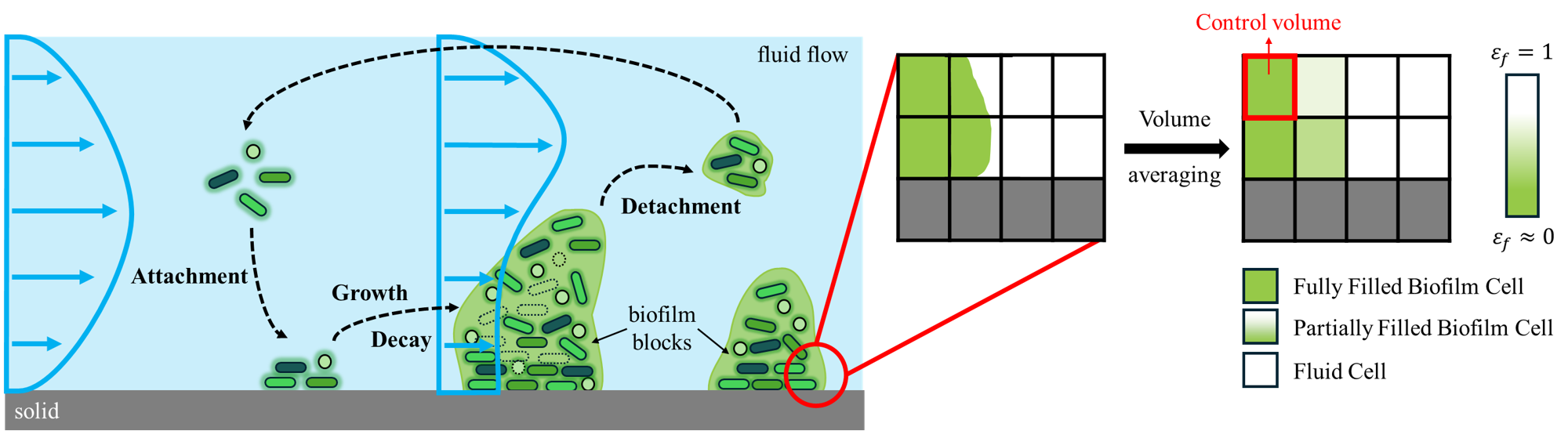
Biofilms grow, change shape, and alter the flow around them. We develop computational methods to study how these changes interact with substrate transport and microbial activity in natural and engineered systems.
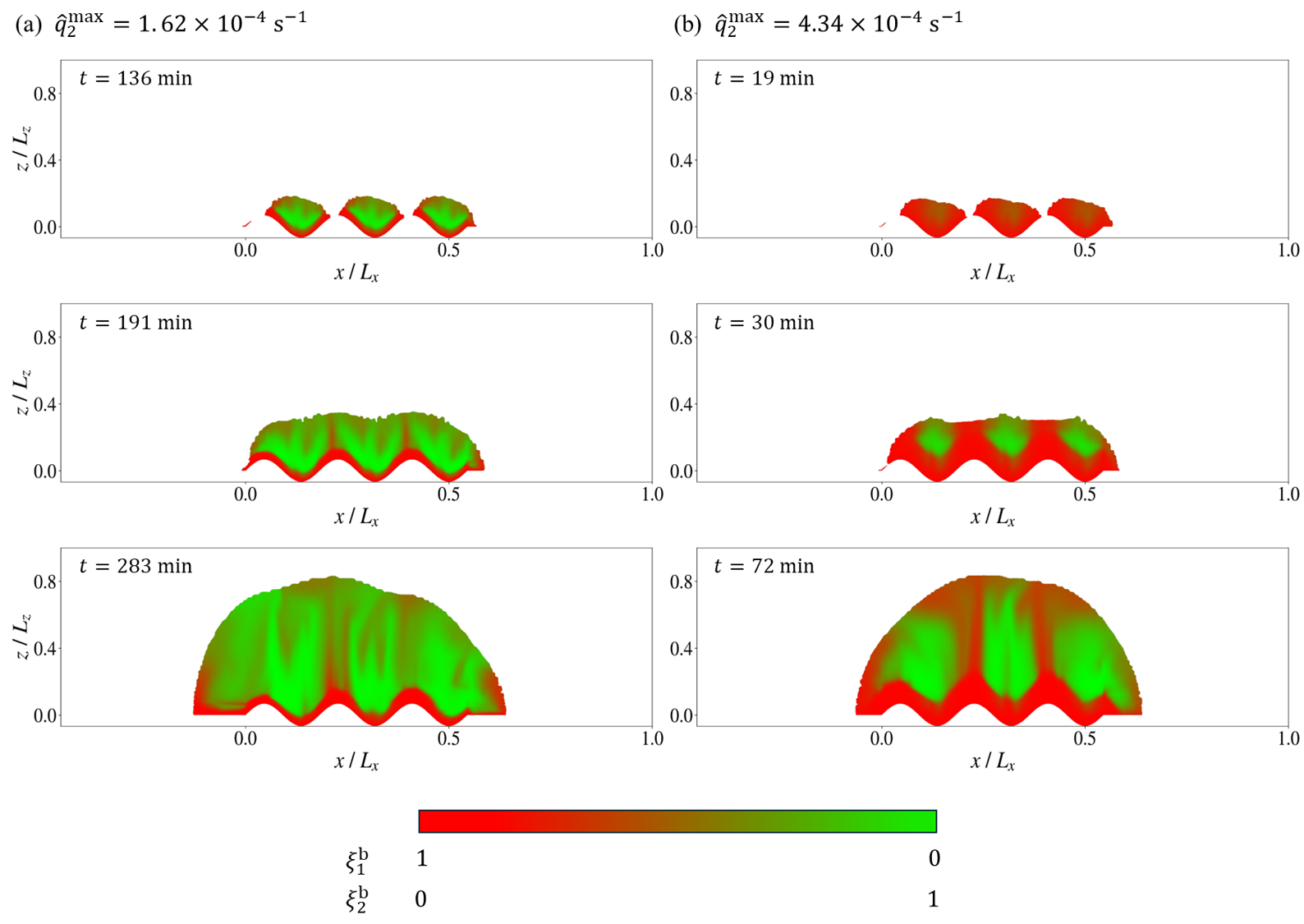
In this work, fluid flow and reactive transport are coupled with a cellular automaton representation of multispecies biofilm growth. The method conserves biomass as biofilms spread and captures characteristic biofilm structures, including species stratification. This provides a way to connect biofilm development with the transport processes that influence reactor performance.
Related publication: Kim S, Yao YN (2026). A conservative micro-continuum-cellular automaton method for multispecies biofilm dynamics in complex flows. arXiv preprint.
Biofilms and microplastic transport in porous media
Biofilms continually reshape pore spaces and local flow pathways. We use microfluidic experiments to observe how this changing environment affects microplastic transport in porous media.
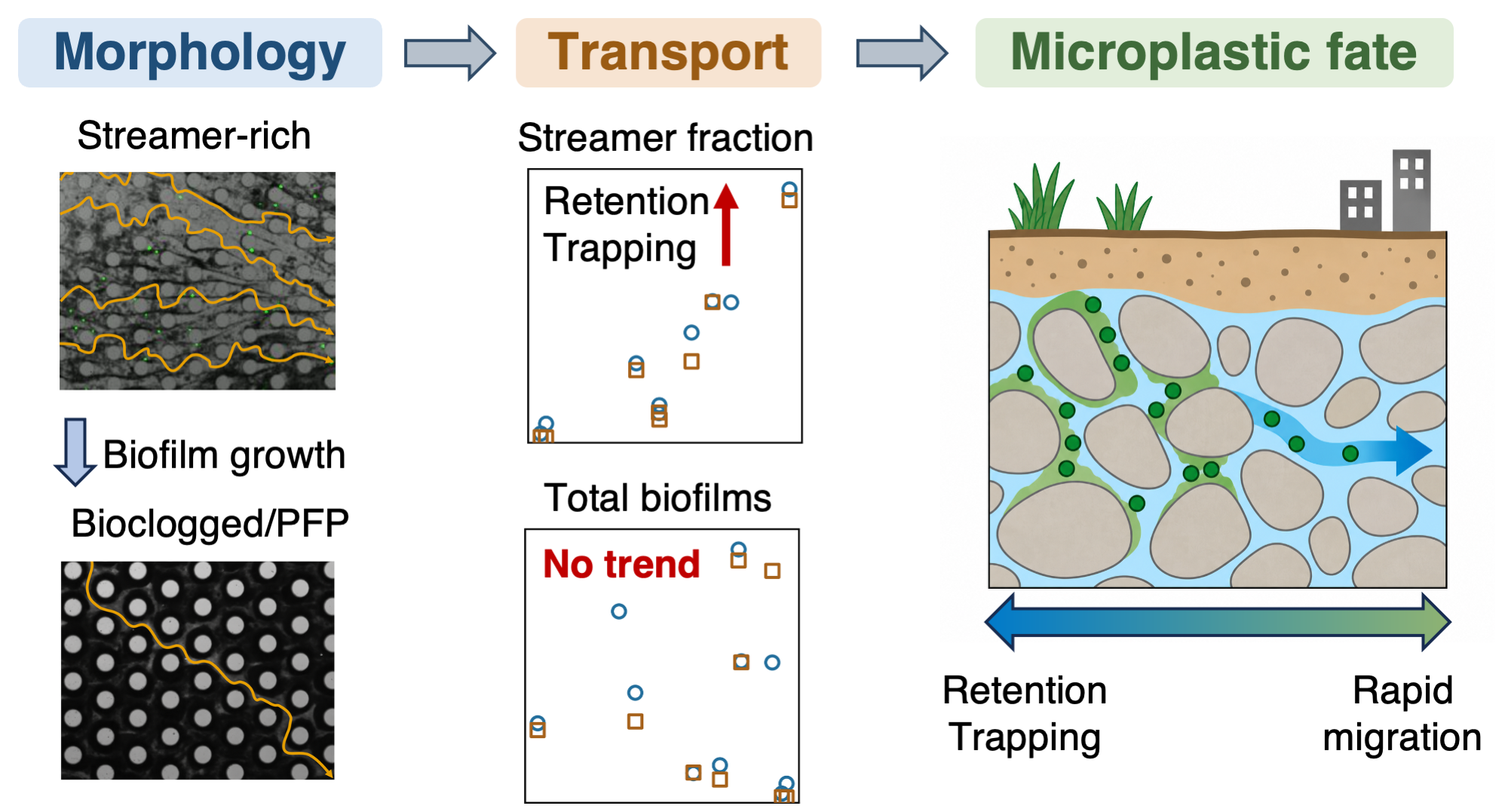
Biofilm growth and individual particles are tracked within the same pore space. Our results show that streamer-rich biofilms increase particle retention and trapping, while connected flow pathways formed during bioclogging allow more rapid transport. These observations show why biofilm morphology matters when predicting particle mobility in soils and subsurface environments.
Video S2: Streamer-rich biofilms
Video S3: Preferential flow paths
Related publication: Shi Z, Yao YN (2026). Evolving biofilm morphology controls microplastic transport in porous media. EarthArXiv preprint.